


SHA was launched as the ultimate solution for the ailing health system. But two years on, all it has brought to most Kenyans is pain and regrets
At 4:15 p.m. in Gurugram, India, as monsoon rains batter the streets and floodwater swells against the curbs, Winnie Njoroge sits down with her 12-year-old daughter, Nicolina, for a late lunch of rice and dal (Indian ndengu).
The two have just returned from hospital, exhausted after hours of waiting and treatment.
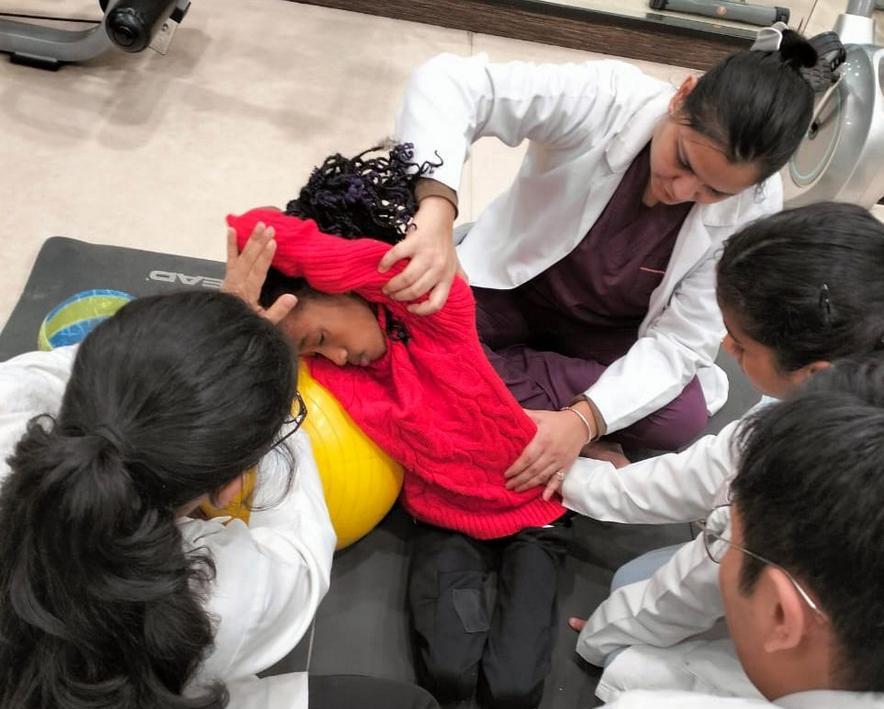
Nicolina, who is fighting a fever and living with the rare genetic condition, Marfan syndrome, pushes the food around her plate. Her flushed cheeks and restless movements betray her discomfort in the heavy, humid air.
Marfan syndrome is a disorder of the body’s connective tissue that holds organs, blood vessels, and bones together. Those affected are often tall and slender, with unusually long limbs, fingers, and toes.
But beyond physical appearance, the condition can trigger life-threatening complications, especially in the heart and blood vessels.
Since July 10, 2025, Gurugram has been home for Winnie, Nicolina, and Nicolleta, her younger daughter. It is far from Kenya, far from family, and far from the foods and familiarities that once defined her life.
“I miss the smell of home food. I miss being surrounded by family,” Winnie says, her voice soft but heavy with longing. “But my daughter’s life must come first. That is why we are here.”
Everything revolves around hospital visits. Meals are delayed, rest comes late, and moments of peace are scarce.
“We eat late and rest late. Everything here is dictated by the hospital,” she says, watching her child shift uncomfortably in the heat.
“Just a minute… Nicolina, wait for the driver to stop so you can vomit,” she says, muffling the receiver.
The taxi carrying them snakes through the crowded streets toward Sector 45, half an hour from Marengo Asia Hospital.
Soon after, another battle begins. This time with the driver over fare. He insists on being paid in exact change. Winnie only has a 500-rupee note (KES 740); the fare is 150 rupees (KES 222). “These people, when you ask for change, they don’t give you,” she complains.
Back at her apartment block, she borrows smaller bills from a Ugandan neighbor to settle the amount.
The apartment is shared with 20 African families, three of them Kenyan, all drawn to India by medical care they cannot access or afford back home. Yet daily survival adds fresh layers of struggle.
“Pani nahin!” she calls out to the caretaker in Hindi. No water. The tap is dry again. She must beg for the pump to be switched on.
For Winnie, the uncertainty extends beyond treatment. She owes the hospital KES 450,000, a debt that was supposed to be cleared by the now-defunct National Hospital Insurance Fund (NHIF). Without settling it, she fears she will not be allowed to leave India.
Back in Kenya, officials had promised the arrears would be covered. The promise has yet to materialize.
Her ordeal mirrors that of thousands of Kenyans caught between illness and a dysfunctional healthcare system, where lofty reforms riddled with ineptitude and corruption are leaving families in limbo.
Wanjiku’s fight
Back home in Murang’a County, Felista Wanjiku remembers the joy of holding her newborn daughter for the first time.
Though she had separated from the baby’s father, her heart swelled with pride. But the joy was short-lived.
At only a few months old, her baby developed persistent congestion. Tests revealed a hole in her heart (ASD) and a thyroid disorder. The local hospital could not manage her condition and referred her to Kenyatta National Hospital (KNH).
The cost of ambulance transfer was KES 10,000, money Felista did not have. “I had to go back home with my baby. Two weeks later, her condition worsened,” she recalls, her voice trembling.
For a time, she relied on the Kang’ata Care Health Program, a Murang’a county initiative that supports low-income households. But the program is now provided through SHA.
With SHA’s perpetual downtimes, bureaucracy, and ineptitude, every clinic visit is a cash-only affair: KES 1,150 per visit at KNH, plus another KES 1,150 for therapy. Medications are extra costs.
“I have sold everything for treatment, including my bed,” Felista says, tears streaming. “My elderly mother even sold all her goats, seven of them, to support me.”
Shut out: Esther Mideva’s case
For 72-year-old Esther Mideva, the barriers are even higher. When she tried registering for SHA, she was told she was “too old.”
“I thought SHA was for everyone? Why am I being denied because of my age?” she asks, her voice breaking.
Kenya’s Constitution guarantees the right to the highest attainable standard of health under Article 43(1)(a). Yet Esther, like many older Kenyans, is being pushed aside.
Esther has no income. At one point, she was homeless. Now, she survives by collecting plastics for resale, rarely earning more than KES 200 a day. “I paid NHIF for years without ever going to hospital. Why won’t they consider that?” she wonders.
Her plea is simple, yet urgent: “We are suffering so much. We are asking the government to help us.”
Between aspiration and execution
SHA was meant to ease suffering, not multiply it. Yet for Winnie in India, Felista in Murang’a, and Esther in Nairobi, the new healthcare experiment has become a daily test of survival.
As civil society groups and health economists warn, the system is caught between aspiration and execution. Until that gap is bridged, it is ordinary mothers, fathers, children, and the elderly who will continue paying the price in debt, in despair, and in lost lives.
Back in India in the dim glow of a Gurugram apartment, Winnie life is a relentless storm of hospital visits, surgeries, and desperate fundraising.
The monsoon outside mirrors her turmoil with rain hammering the windows as she watches her 12-year-old daughter, Nicolina, battle the weight of Marfan syndrome.
“Every six months, we’re back here for reviews and surgeries,” Winnie says, her voice frayed but resolute.
“I thought each operation would bring relief. Instead, her condition worsens. It’s been… unbearable.” This is her seventh pilgrimage to India, each trip a gamble with her daughter’s fragile life.
Their journey began in 2020 when doctors in Kenya prescribed spinal surgery for Nicolina, a staggering KES 3.2 million blow. Every year since, Winnie has clawed together roughly KES 2.5 million for follow-up procedures, each one a fresh wound to her dwindling resources.
In 2024, she returned with both her daughters in tow, one needing epilepsy closure surgery, the other, Nicolina, requiring a KES 3.2 million operation. The costs are a mountain she can’t climb alone.
Winnie has turned to every lifeline she can find including media appeals, online fundraisers, and the fleeting kindness of strangers. But surgery, she’s learned, is no magic fix.
Nicolina’s body betrays her as a stubborn open wound refuses to heal, demanding dressings at KES 4,800 every 10 days and portable oxygen at KES 35,000.
Emergency nurse escorts cost between KES 60,000 and KES 100,000, though Winnie found one who took pity, charging KES 30,000. Flights to India bled her dry: KES 150,230 for herself, KES 286,960 total for her and her daughters.
Daily life is a tightrope. Groceries cost KES 500 a day, the apartment room KES 2,500.
When her insurance company in Kenya refused to cover Nicolina’s congenital condition, Winnie was discharged from a Nairobi hospital with a KES 349,000 bill. That same day, she boarded a flight to India under emergency care, her heart pounding with dread and determination.
“I have no choice,” she says, her voice steady despite the cracks. “Fundraisers, media write-ups, any platform I can find. That’s how my children survive.”
But the cost is more than financial. Her marriage crumbled under the strain. One of her two plots of land are gone, sold to cover medical bills.
Friendships withered, her calls for help branding her as “the borrowing friend.” “Every time I dial, I feel their sighs,” she admits, her gaze dropping to the floor.
Shared sorrow in a strange land
In Room 204 of the apartment, another Kenyan woman, Achieng’, shares Winnie’s exile. Her husband has been trapped in India for six months, tethered to a KES 400,000 hospital bill.
Three months ago, Winnie held a grieving family as they mourned their 18-year-old daughter, lost to a heart condition in Chennai.
They left India not only heartbroken but shackled by a KES 2 million ICU debt. In this apartment block, pain is a shared language among the 20 African families, their dreams of healing tangled in red tape and relentless costs.
For Nicolina, who turned in 13 in October last year, childhood is a distant memory. She hasn’t seen a classroom since 2023, her Grade 5 year stolen by hospital beds and recovery rooms. School, friends, and play, all sacrificed to the rhythm of IV drips and surgical scars.
Yet, in her quiet moments, her spirit flickers with defiance. “I want to be an actress,” she whispers, her eyes bright despite her fever. “I want to go to Hollywood, meet Tom Holland, the Spider-Man actor. I want to tour the world. Not for doctors, but for filmmaking.”
Her dreams are a fragile flame in a storm, but Winnie guards them fiercely. Each fundraiser, each plea, is a vow to keep Nicolina’s hopes alive. In a foreign land, under a relentless monsoon, a mother fights not just for her daughter’s survival, but for the chance to see her soar.