


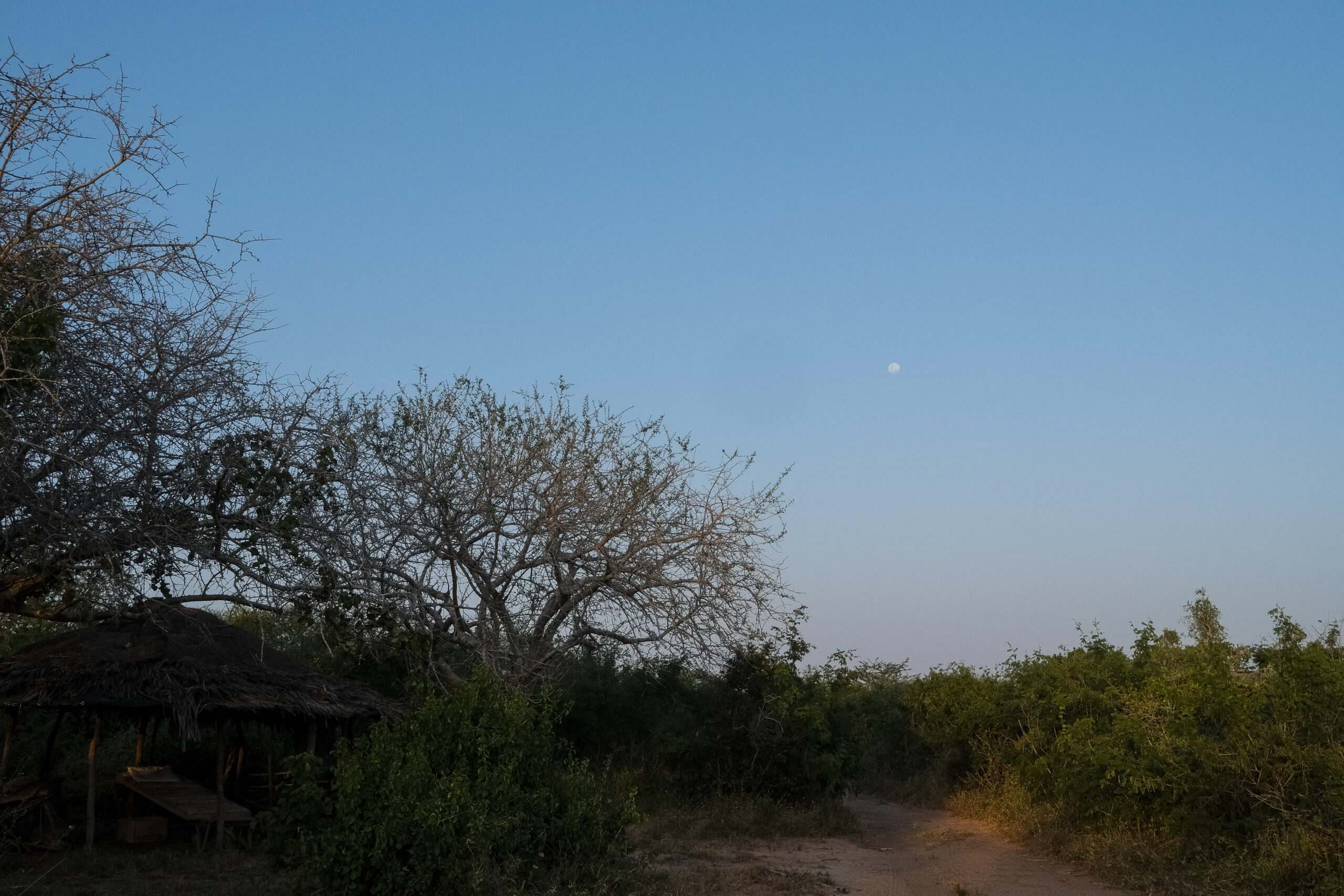
Crime Scene 126 is a three-room mud cabin, much in keeping with the Stone Age architecture of the settlement. It has an outside structure whose purpose is a mystery; it may have served as a kitchen, though there is a room with an earthen hearth in the main house.
At the back of what remains of the house, there is a curious profusion of food wrappings. Was this a store? A shop? Could this have been the shop of the famous Mugambi the merchant – the Mr Plug of the settlement – whose bizarrely fractured body was exhumed, dressed to the nines and still fat where most others were emaciated? A single, conspicuous article of clothing brings tears to the eyes and a lump to the throat: a red, Croc-type shoe with white decorations to the front, possibly worn by a three or four-year-old girl. In the mind’s eye, one can see a child’s soft heel at the back and cute little toes peeking out of the front. A structure of rough, flat stones forming the shape of a bench sits in front of the house which is hedged by a fence of vicious thorns common in the area and which makes the compound impenetrable to animals and humans alike. Near the bench was a discarded torch. Throughout the house and the compound are sisal ropes and strips-of-cloth restraints.
Early responders claimed this was no ordinary house; it was a holding pen for children who were being force-fasted. The stone bench was a guard station to ensure that the children stayed in and no one interfered in the process, they said. The early responders claimed that as many as 20 children would be locked up in the house at a time, without food or water and scream, cry and whimper themselves to death. This is a widespread allegation. Temperatures during the day can reach the high 30s, or hotter, inside the dwellings.
The claims are, of course, impossible to verify because of ongoing criminal cases and police investigations.