


Beats, cameras, action as Gen-Zs takes over Nairobi streets
Subhead: Every Sunday, when the city’s hustle sleeps, a new Nairobi wakes. One of beats, cameras, and dreams too big for four walls.
Teaser: The weekday capital is a place of deadlines, traffic jams, and grinding survival. But on Sundays, the suits vanish, the honking fades, and the streets become a playground for dancers, models, and digital hustlers chasing views, likes, and rent money. It’s a revolution born from a single policy change, now spilling across TikTok feeds and Instagram stories, one perfect shot at a time.
By Mwende Muthiani
By Sunday morning, Nairobi has shed its weekday skin. The honking is gone. The suits are gone. The rush is gone. And in their place? Beats. Cameras. Swagger.
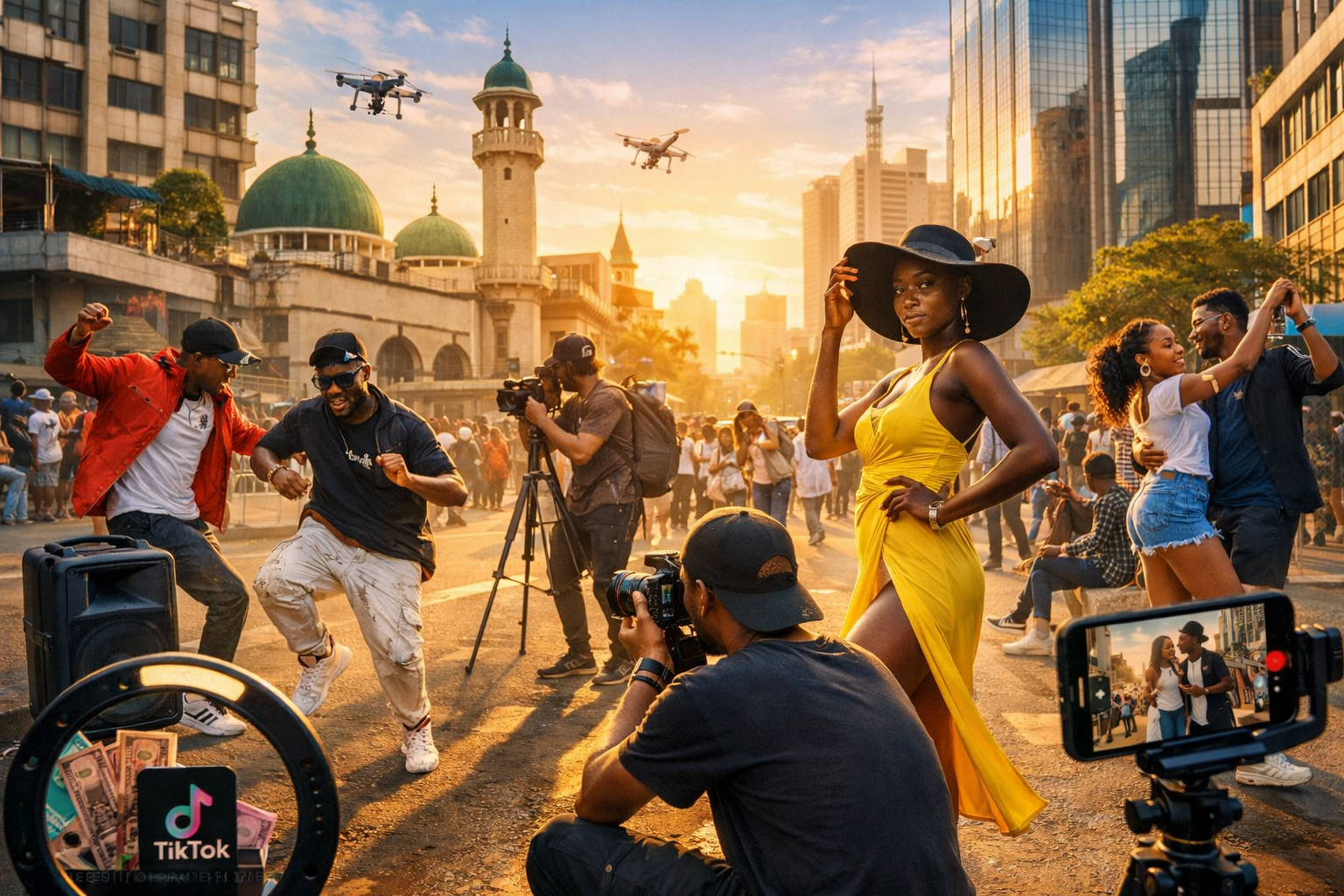
The Central Business District morphs into a giant open-air studio. The streets become catwalks, music video sets, and TikTok playgrounds. Here, a dance crew hits every beat in front of Jamia Mosque. There, a fashion model poses under the hard glint of glass towers. Down Muindi Mbingu Street, a tripod stands like a lone soldier while a couple spins for Instagram.
It’s a takeover. And it all began when Governor Johnson Sakaja tore down the paywall on creativity.
Before late 2022, the city treated photography like a luxury for the privileged. You needed a filming licence from the Kenya Film and Classification Board, that cost up to Sh6,000. Then a letter to the police station with jurisdiction over your location. A signature. A stamp. A visit to City Hall. Another fee, sometimes Sh4,000 for a single day. Miss a step, and you risked being stopped, harassed, or fined.
Then Sakaja lifted the fees for freelance photographers and filmmakers. No more permits. No more police letters. “Some of these rules are colonial,” he said. “What harm can a photo really cause when it’s shared?” With one stroke, he unlocked the city. And the youth moved in fast.
For 24-year-old Vincent Otieno from Mathare, Sundays are a workday, but the best kind. He and his six friends arrive with speakers, cameras, and the latest dance challenges cued up on their phones. They record in bursts: a few takes, some laughing resets, then another flawless routine for TikTok.
The group earns from three streams: tips on TikTok, YouTube ad revenue, and live performances at private events. Ksh15,000 a month may not sound like much, but for them it’s freedom. Freedom from sitting at home waiting for a job that may never come.
Twenty-two-year-old Mercy Lubembe says Sunday is the day Nairobi reveals her beauty. “The buildings, the streets, trees… all make videos look so swanky. No need for a studio.”
Model Caycee Achieng, aka “Lupita Nyakisumo” to her 250,000 TikTok followers, struts in thrifted fashion or designer wear, depending on the client. She advertises makeup, clothing, and gadgets, each shoot timed to catch the golden glow before sunset. Social media is her job, and the CBD is her office.
For some, the streets are not just an artistic choice. They are the only viable career option.
Angeline Muema, still in college, has stopped hoping for the mythical “white-collar job.” “I might graduate and not get a job,” she says. “Better to make these videos and earn something.” With her friends Trisha and Cecilia, she runs a TikTok page that earns them Sh80,000 a month from fan gifts.
Joe Owino, 26, has a degree in nursing and public health. He spent months job-hunting before giving up and turning to dance. “Instead of stealing, we dance,” he says. “We feed our families this way.” For him, content creation is more than entertainment. It is a way out of temptation and into dignity.
Technology as the great equaliser
A decade ago, editing high-quality video required expensive software and a powerful computer. Now, these creators shoot, edit, and publish everything on their phones. One moment they are posing on Banda Street; the next, they’re trimming clips, syncing music, and uploading to TikTok in real time.
Technology has levelled the field. A smartphone in the right hands is a production studio. And Nairobi’s streets? They’re the perfect set – free, varied, and endlessly photogenic.
The dark side of the spotlight
But where the crowds go, so do the opportunists. Criminals have infiltrated the creative rush, posing as photographers or dancers while scanning for their next victim. Phones are snatched, bags unzipped, wallets gone before the owner notices.
Last year, following several incidents, the governor deployed city council askaris alongside police to patrol the busiest Sunday photography spots. Nairobi Central OCPD, Stephen Okal insists the city is safe: “Enough security personnel are on standby to ensure the city is safe on any of those days the youth have been allowed to do photography in the CBD.”
The measures have helped, but the risk remains, a reminder that even the most joyful spaces in Nairobi can turn dangerous in an instant.
The stakes are high because for many, this isn’t a hobby. It’s survival.
The 2023 National Council for Population Report says 800,000 Kenyan youths enter the job market each year. The available opportunities, formal or informal, fall far short, and that is where street photography and content creation have become part of a new survival toolkit. They are the gig economy’s creative wing, one that blends art with hustle.
On Sundays, the CBD feels like a glimpse into what that future might look like: self-employed creatives building audiences, selling influence, and turning dance moves into rent money.
As the afternoon deepens, golden light pours between Nairobi’s towers. Shadows stretch across the tarmac. A final round of dances, photos, and short skits is squeezed in before the light fades. Creators pack their gear, still buzzing with the energy of the day. Their videos are already being watched in Kisumu, in Mombasa, in Lagos, in London.
By Monday, the streets will be back to their weekday script of matatus squeezing through traffic, commuters spilling off buses, vendors shouting for customers… But next Sunday, the transformation will happen again.Because Nairobi is no longer just a capital city. She is a stage. And every week, her young storytellers are rewriting the script.
Headline: Nairobi Turns Into a Stage: The Sunday Takeover
Subhead: Every Sunday, when the city’s hustle sleeps, a new Nairobi wakes — one of beats, cameras, and dreams too big for four walls.
Teaser:
The weekday capital is a place of deadlines, traffic jams, and grinding survival. But on Sundays, the suits vanish, the honking fades, and the streets become something else entirely — a playground for dancers, models, and digital hustlers chasing views, likes, and rent money. It’s a revolution born from a single policy change, now spilling across TikTok feeds and Instagram stories, one perfect shot at a time.