


When Amara returned to Lagos after seven years in London, the air felt louder.
Not just the danfo buses coughing smoke. Not just the hawkers singing prices into traffic. The air itself carried rhythm—Afrobeats spilling from open shop doors, generators humming basslines beneath conversation, the Atlantic breathing against Bar Beach like a tired giant.
London had been grey suits and polite distance. Lagos was color without apology.
Amara stood on the balcony of her mother’s house in Surulere and watched the evening unravel in orange and pink. Below, her aunties debated politics as if the president himself might emerge from the compound gate to defend his choices. A neighbor’s radio blasted a song by Burna Boy, the chorus looping like a prophecy: we rise by lifting others.
She had come back to build something.
In London, she studied fashion history, learning the language of European silhouettes—A-line, empire waist, couture discipline. But in lecture halls lined with portraits of powdered aristocrats, she felt invisible. Africa appeared only as “influence,” as “exotic reference,” as a footnote.
She wanted more than reference. She wanted authorship.
The idea began with her grandmother’s wrapper.
It was Ankara—bold indigo and sunburst gold, patterned with interlocking crescents. As a child, Amara would lie beside her grandmother during power outages, tracing the shapes while stories spilled into the dark. Stories of market women who funded revolutions. Of tailors who stitched resistance into hems. Of cloth that signaled tribe, status, celebration, mourning.
Fabric was never just fabric.
The morning after she arrived, Amara went to Balogun Market on Lagos Island. The market pulsed—corridors of color stacked floor to ceiling. Wax prints from Ghana. Aso-oke from the southwest. Kente shimmering like woven sunlight.
She ran her fingers across textures until they hummed.
“Ah, London girl!” one trader teased. “You have come to price us in pounds?”
“I’ve come to build,” Amara replied, smiling.
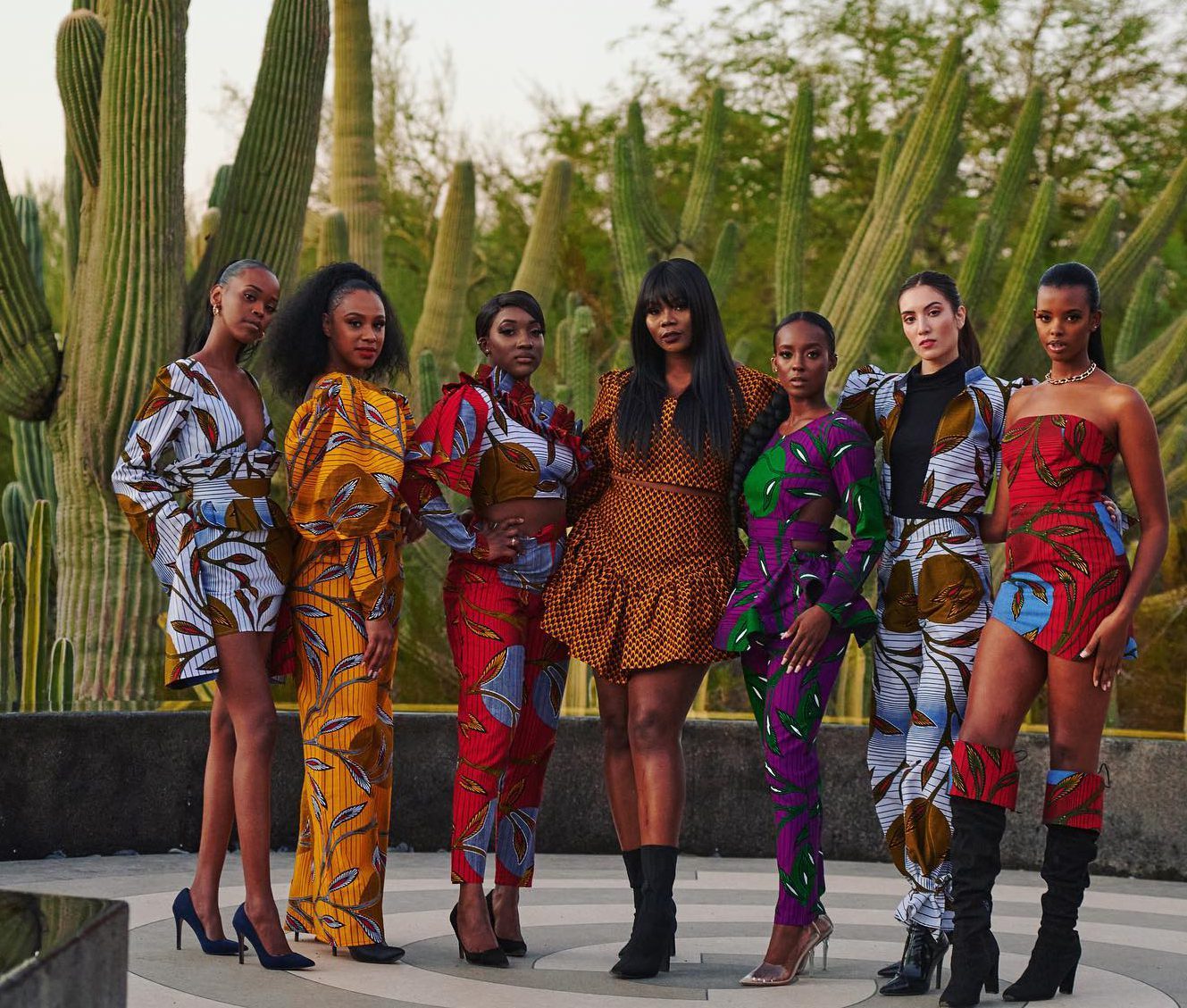
She wasn’t interested in copying Paris runways or chasing minimalism that erased memory. She imagined sharp blazers cut from Ankara. Structured trousers in adire. Bridal gowns that married tulle with aso-oke panels like ancestral signatures stitched into modern vows.
Contemporary African style, to her, was not trend. It was translation.
Weeks later, she rented a small studio in Yaba. The walls were cracked, the electricity unreliable, but the light—when it came—fell beautifully across fabric. She hired two local tailors, Kunle and Sade, both masters with impatient hands.
Her first collection was called Inheritance.
A fitted jacket with exaggerated shoulders in emerald Ankara, lined with silk the color of kola nut. A jumpsuit blending Western tailoring with Yoruba-inspired embroidery. A streetwear set—crop top and cargo pants—cut from wax print so bold it refused to whisper.
She posted sketches online. The response was immediate. Young Nigerians in Toronto, Johannesburg, Atlanta saw themselves reflected back—not as caricature, but as complexity.
At the launch show, the generator failed.
For one breathless second, darkness swallowed the room.
Then someone began drumming on a chair. Another voice rose in song. Phone flashlights flickered on, one by one, until the space glowed like a constellation.
The models walked anyway.
Ankara caught the light. Gold thread sparked. The audience leaned forward, not away.
In that improvised brilliance, Amara understood something essential: contemporary African style was not about perfection. It was about resilience. It was about taking interruption and making rhythm from it.
After the show, a journalist asked her, “How would you define modern African fashion?”
Amara paused.
“It is memory moving forward,” she said. “It is tradition refusing to be archived. It is the past tailored to fit the future.”
Orders came in from boutiques abroad. Stylists reached out. A rising Afrobeats star requested a custom stage piece. Her mother began answering calls with quiet pride swelling beneath her calm.
One evening, exhausted but electric, Amara visited her grandmother’s grave. She laid a strip of Ankara across the stone.
“They see us now,” she whispered.
The wind lifted the fabric gently, like a blessing.
In Lagos, the night carried on—horns, laughter, distant waves, music threading through concrete and sky. And somewhere between old stories and new ambition, a generation stitched itself into visibility.
Bold. Unapologetic. Contemporary. African.