


By Peter Ngare
Kenya has dropped six places in the 2025 Global Innovation Index (GII) to position 102 out of 139 economies worldwide, marking a decline from its 96th ranking in 2024.
According to the index released by the World Intellectual Property Organization (WIPO), Kenya stands as a mid-tier performer in Sub-Saharan Africa (SSA), ranking 9th among 32 nations in the region.
In the broader African context, Kenya occupies 12th spot, trailing leaders like Mauritius and Morocco but outpacing regional peers in East Africa.
The GII rankings are derived from a rigorous, data-driven framework designed to capture the multifaceted nature of innovation ecosystems that includes foundational enablers of innovation such as institutions, human capital and research, infrastructure, market and business sophistications.
Africa’s innovation landscape in GII 2025 shows encouraging momentum, with new SSA entrants including Seychelles, Malawi, Lesotho and Guinea, boosting regional coverage and revealing untapped potential.
The continent’s average score hovers around 18.01, but top performers demonstrate that strategic investments can yield outsized results.
Mauritius leads Africa at 53rd globally, buoyed by robust institutions and market sophistication.
Morocco follows at 57th, propelled by advances in renewable energy and digitalization.
South Africa secures 61st, maintaining its overperformer status for the eighth year through strong knowledge outputs.
Other standouts include Seychelles (75th), Tunisia (76th), Egypt (86th), Botswana (87th), and Senegal (89th), the latter excelling in infrastructure despite its lower-middle-income status.
Kenya’s 102nd global rank positions it solidly in the middle of the pack, above the Sub-Saharan average in key areas like infrastructure, business sophistication, knowledge outputs, and creative outputs.
However, Kenya lags in human capital and market sophistication, reflecting challenges in education access and financial inclusion.
Within East Africa, Kenya remains the innovation frontrunner, but the gap is narrowing as neighbors invest in digital and institutional reforms.
Rwanda, at 104th globally (12th in Africa), edges closer with notable strengths in institutions and overperformance relative to its inputs, a trend sustained for 12 years.
Tanzania has made incremental gains, ranking around 21st in Africa, driven by improvements in infrastructure and market access.
Uganda follows at 22nd regionally, with universities like Makerere ranking 63rd in global academic innovation, signaling potential in human capital.
Despite the ranking dip, Kenya’s innovation engine hums with promise, particularly in outputs where it ranks 85th globally.
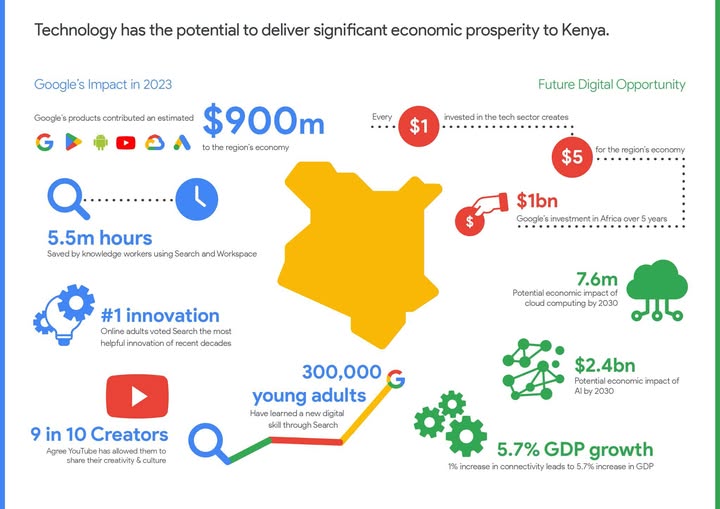
On Vibrant ICT and Digital Economy, Kenya ranks high in ICT services exports fueled by hubs like Konza’s “Silicon Savannah” and mobile money innovations like M-Pesa that have revolutionized financial inclusion, boosting market sophistication.
On Youth Demographic Dividend, Kenya has 23rd global ranking in youth bulge buoyed by a young, tech-savvy population for entrepreneurship. This demographic powers labor productivity growth and creative outputs.
However, challenges persist, including high applied tariffs, low tertiary enrollment, and gender gaps in advanced-degree employment.