


Kenya has long positioned herself as a beacon of stability and diplomacy, a neutral mediator in regional conflicts and a bridge between global powers.
Yet, under President William Ruto’s administration, which began in September 2022, this reputation has been tested like never before.
From hosting controversial rebel groups to bold statements on international crises, Ruto’s foreign policy has drawn accusations of inconsistency, favouritism, and outright blunders.
As one analyst put it, Kenya’s approach has transformed into a “masterclass in fumbling, force, and foreign blunders,” leaving the nation isolated on the continental stage.
Kenya’s involvement in Sudan’s ongoing civil war, which erupted in April 2023 between the Sudanese Armed Forces (SAF) and the Rapid Support Forces (RSF), exemplifies the regime’s high-stakes diplomacy.
President Ruto initially positioned Kenya as a peacemaker, leading efforts under the Intergovernmental Authority on Development (IGAD) to mediate.
Urging an end to the conflict
In July 2023, he hosted talks in Nairobi, urging an end to the conflict that has displaced millions and caused widespread atrocities.
By February 2025, Ruto reiterated calls for “genuine and inclusive dialogue” during a meeting with Sudanese officials, emphasising Kenya’s commitment to humanitarian support.
However, sources paint a fractured picture, with accusations that Kenya has favoured the RSF, a paramilitary group sanctioned for genocide and war crimes.
Al Jazeera reported in March 2025 that Ruto’s “friendliness with regional rebel groups” has marred Kenya’s “good neighbour reputation,” positioning it as a side-taker rather than a neutral broker.
The Africa Report highlighted Kenya’s “disquieting turn” under Ruto, contradicting its historical justice-oriented stance by hosting RSF leaders, which drew backlash from Sudan’s government and strained bilateral ties.
But Kenya’s Government has defended its role as impartial mediator, with Ruto reminding the world that the crisis stems from a military overthrow.
VOA reported tensions in July 2023 when Sudanese General Burhan accused Ruto of favouring the RSF, impeding IGAD efforts.
Bellingcat added a layer of controversy in June 2025, linking Kenyan weapons to the conflict and noting Sudan’s import ban on Kenyan goods amid perceived Ruto-RSF ties. These divergent narratives underscore the regime’s inconsistent signalling.
Hosting DRC rebels
Another glaring misstep occurred in December 2023 when Nairobi hosted the launch of the Congo River Alliance (AFC), a political-military coalition including the M23 rebel group, accused of atrocities in eastern Democratic Republic of Congo (DRC).
Led by former Congolese electoral chief Corneille Nangaa and M23 leader Bertrand Bisimwa, the event at a Nairobi hotel sparked outrage.
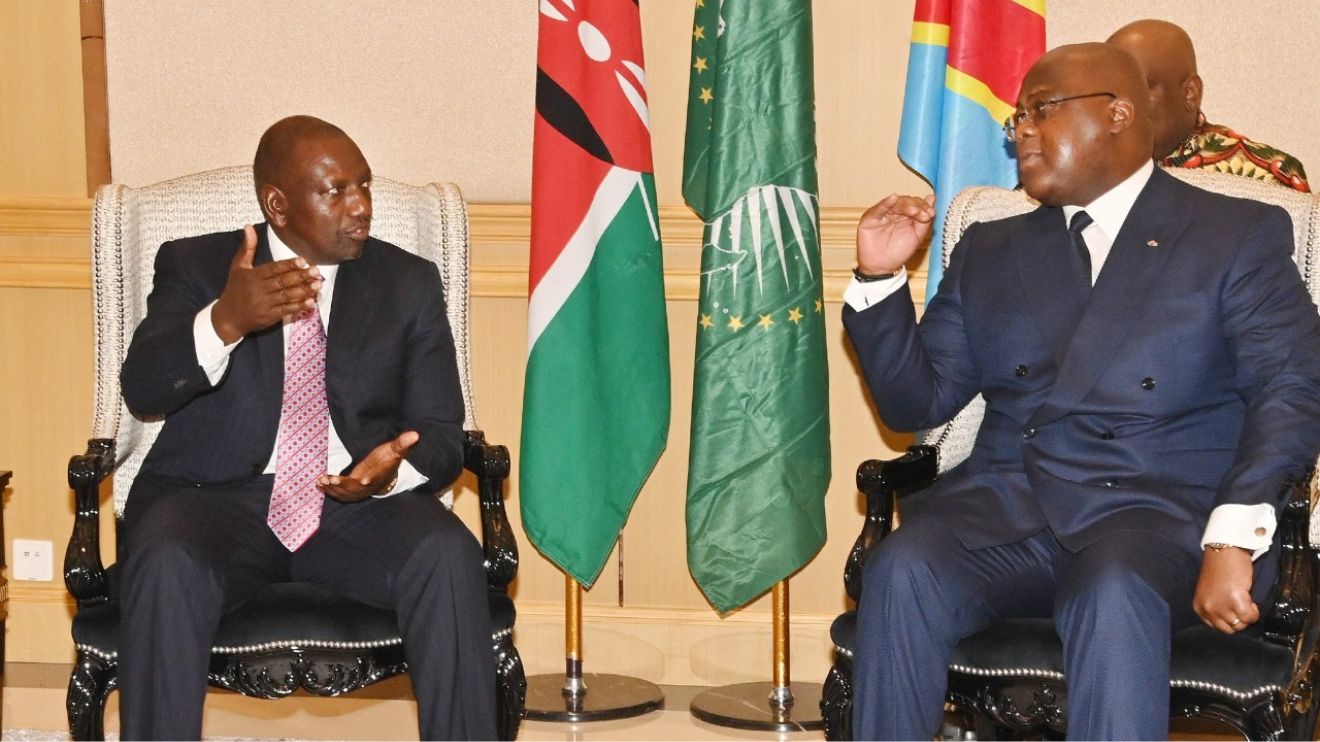
DRC President Félix Tshisekedi recalled the ambassador from Kenya, condemning the “destructive alliance” and warning of impacts on relations.
Kenya’s Foreign Ministry quickly “disassociated” itself, launching a probe and denying support, but the damage was done.
Analysts view this as a betrayal of Kenya’s role in the Nairobi Peace Process, aimed at stabilising eastern DRC.
The BBC reported that the incident further deteriorated DRC-Kenya ties, with Kinshasa summoning its ambassador. By February 2025, Kenyan Foreign Policy noted the event had fueled Kinshasa’s mistrust, with DRC refusing to accept Kenya’s ambassador for over a year.
Statements on Hamas, Iran-Israel, and Ukraine
Ruto’s regime has also waded into international conflicts with bold, often pro-Western pronouncements.
Following Hamas’s October 7, 2023, attack on Israel, Ruto issued a statement on X: “Kenya joins the rest of the world in solidarity with the State of Israel and unequivocally condemns terrorism and attacks on innocent civilians.”
This drew criticism for ignoring Palestinian grievances, with Anadolu Agency noting Kenya’s initial strong support for Israel softened amid domestic pressure.
By November 2023, Ruto called for a ceasefire, marking a shift.
On the 2024 Iran-Israel missile exchanges, Ruto condemned Iran’s attacks as a “significant threat to global peace,” aligning firmly with Israel.
Regarding Ukraine, Ruto initially condemned Russia’s invasion as “unlawful and unjust” in June 2024, urging collective efforts for peace.
However, by June 2025, Kenya adopted a neutral stance in its foreign policy pivot, balancing relations with both sides.
The Africa Report described this as “playing both sides” to exploit rivalries.
Trade wars with neighbours
Ruto’s tenure has also seen escalating trade disputes within the East African Community (EAC). Uganda sued Kenya at the EACJ in January 2024 over blocked petroleum imports, accusing Nairobi of obstructing infrastructure use. A March 2024 “handshake” between Ruto and Museveni aimed to resolve oil and DRC issues, but tensions lingered.
With Tanzania, rows over flights and exports led to reciprocal bans; Ruto apologised publicly in May 2025 for “arrogant” remarks comparing Kenya favourably to neighbours.
The East African warned these spats risk trade and investments, with DRC relations sinking further amid rebel hosting.
Unpacking the gaffes
Analysts attribute these missteps to a pro-Western tilt, economic opportunism, and institutional weaknesses, lacking nuance and exposing a “soft underbelly” in foreign policy.
The SWP Berlin report notes Ruto’s “like-minded” alignment with Europe, prioritising global recognition over African unity.
Kenyan Foreign Policy critiques the regime’s “adventurism,” driven by inexperience and opportunism with economic interests, like Western partnerships for Haiti missions or Israeli arms, often overriding regional sensitivities.
These errors have isolated Kenya, culminating in Raila Odinga’s failed AU Commission bid in February 2025, seen as a rebuke to Ruto’s diplomacy.
Strained EAC ties threaten trade with Kenya’s biggest partners like Uganda and Tanzania, potentially costing billions.
Globally, risks include security threats from Middle East spillovers.
The Africa Report warns of a “slippery slope” in Congo, Sudan, and Haiti ventures. Domestically, public discontent continues to trouble Ruto’s regime.
To mend fences, experts recommend resetting messaging for neutrality and structure with a more structured and strategic approach that prioritises African unity.
Other approaches, experts say, include enhancing institutional capacity through trained diplomats and inclusive decision-making to prevent unilateral moves.
They also recommend recommitting to Pan-Africanism to rebuild trust and also endeavour to balance East-West ties without alienating neighbours.
Kenya’s diplomatic legacy is resilient, but Ruto’s era demands introspection. By learning from these gaffes, Nairobi can once again lead with poise, fostering peace and prosperity in a volatile world.