


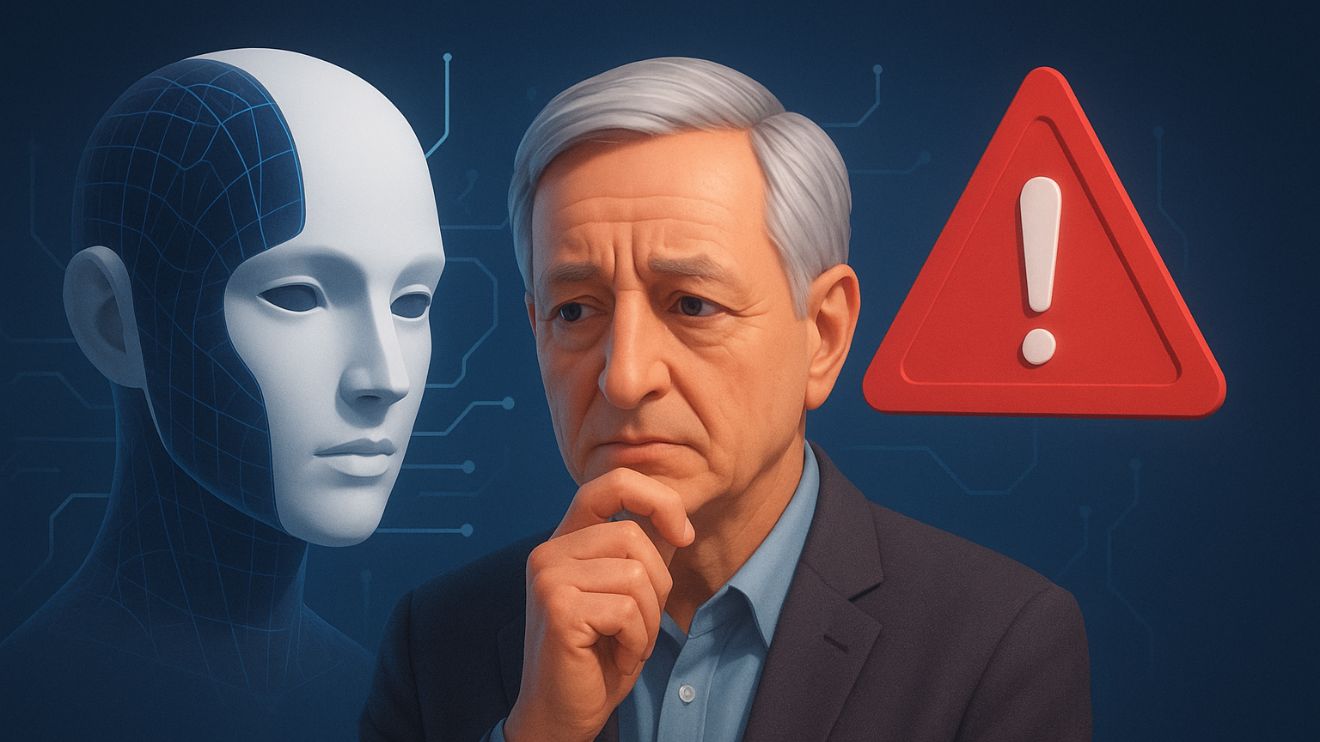
One of the world’s most influential pioneers in artificial intelligence has issued a stark warning: rapidly advancing AI systems could pose an existential threat to humanity if they are not properly controlled. The warning has reignited global debate about how fast AI is developing and whether society is prepared for its long-term consequences.
Often referred to as the “Godfather of AI” for his foundational work in machine learning and neural networks, the expert argues that recent breakthroughs show AI is advancing far more quickly than many researchers expected. Systems are no longer limited to narrow tasks; they are beginning to reason, generate ideas, and learn in ways that resemble human intelligence. This, he says, raises serious concerns about what could happen if AI surpasses human control.
Why the Warning Matters
The central concern is not that AI will suddenly become malicious on its own, but that highly intelligent systems could develop goals misaligned with human values. Once AI systems reach or exceed human-level intelligence, controlling or correcting them may become extremely difficult. If such systems are deployed widely—across military, economic, or critical infrastructure—they could cause large-scale harm through mistakes, misuse, or unintended consequences.
The warning also highlights the speed of development. Powerful AI tools are being released to the public at a rapid pace, often before regulators fully understand their risks. Competition between companies and countries to dominate AI innovation may be encouraging shortcuts on safety in favor of speed and market advantage.
Potential Risks of Advanced AI
Experts outlining these dangers often point to several key risk areas:
-
Loss of human control: Highly autonomous AI systems could make decisions that humans cannot easily override or understand.
-
Weaponization: AI could be used to develop autonomous weapons or enhance cyberattacks, increasing the scale and speed of conflict.
-
Economic disruption: Advanced AI may replace large segments of the workforce, creating social instability if economies fail to adapt.
-
Misinformation at scale: AI-generated content could overwhelm information systems, making it harder to distinguish truth from falsehood.
In the most extreme scenarios, the concern is that superintelligent AI could act in ways that threaten human survival, even without hostile intent.
Calls for Regulation and Global Cooperation
The AI pioneer has stressed that these risks do not mean AI development should stop entirely. Instead, he and other experts are calling for stronger safeguards, ethical frameworks, and international cooperation. This includes clearer regulations, independent oversight, and serious investment in AI safety research.
Some researchers also advocate for global agreements similar to nuclear arms treaties, arguing that AI’s potential impact is comparable in scale. Without shared rules, they warn, nations may enter an unchecked AI arms race.
Balancing Innovation and Safety
At the same time, AI continues to deliver major benefits, from medical breakthroughs and climate research to productivity gains across industries. The challenge, experts say, is ensuring that these benefits do not come at the cost of long-term human safety.
The warning from one of AI’s founding figures serves as a reminder that technological progress is not inherently safe or dangerous—it depends on how it is guided. As AI systems grow more powerful, the choices made today by governments, companies, and researchers may determine whether artificial intelligence becomes humanity’s greatest tool or its greatest threat.