


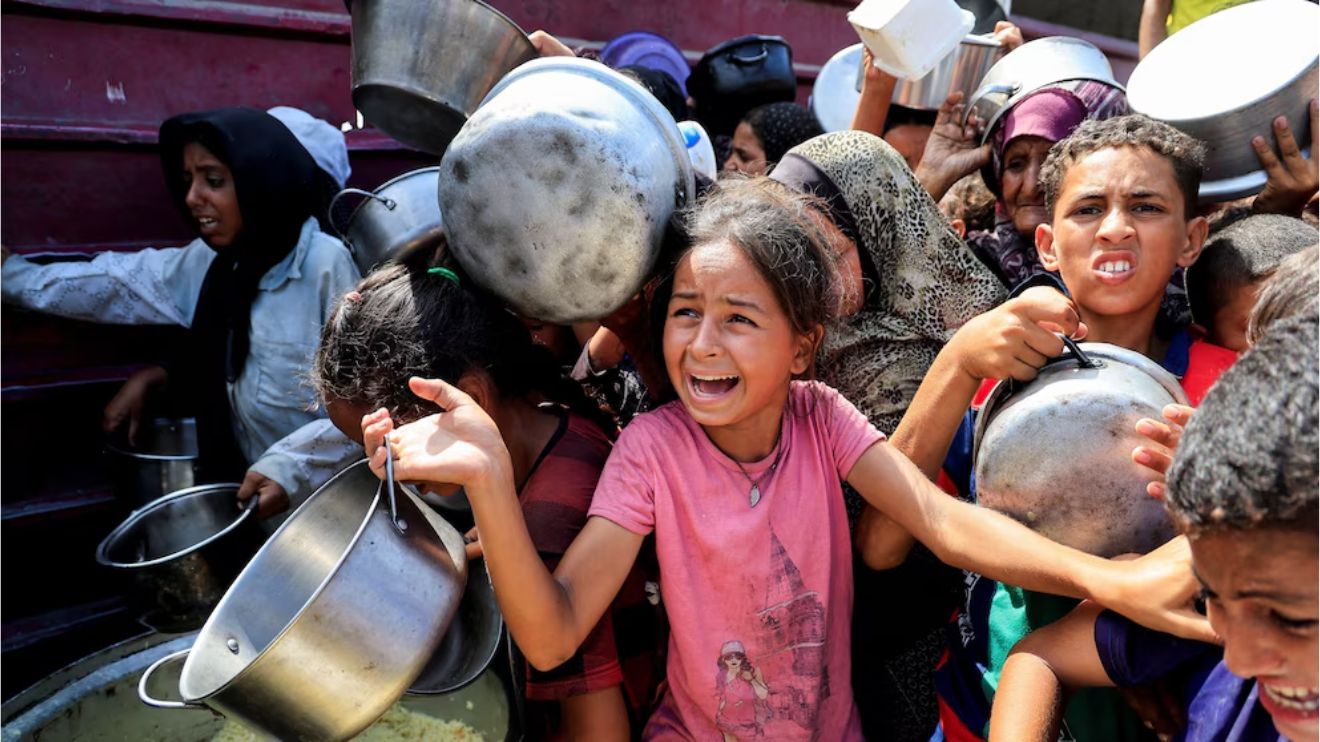
As the calendar turns to September 2025, the Gaza Strip remains a theatre of unrelenting horror, where Israel’s military offensive, now in its third year, has escalated into what UN experts and human rights organisations describe as genocide and systematic atrocities against Palestinians.
What began as a response to Hamas’s October 7, 2023, attack has morphed into a campaign of destruction, famine, and displacement, with over 60,000 Palestinian deaths and a confirmed famine gripping the enclave.
Yet, the international community largely watches in silence, issuing occasional condemnations but failing to impose meaningful consequences.
This inaction, from veto-wielding powers like the United States to divided regions such as Africa, raises profound questions about global complicity.
Even as evidence mounts of war crimes, including deliberate starvation and attacks on civilians, the world dithers.
From defence to alleged genocide
Israel’s stated objectives in Gaza remain the dismantling of Hamas and the return of hostages, but mounting evidence suggests a broader intent to be the erasure of Palestinian life and society in the Strip.
Israeli Prime Minister Benjamin Netanyahu’s government has intensified operations, approving a plan in August 2025 to seize Gaza City, framing it as necessary to eliminate militant threats.
However, UN experts have characterised this escalation as part of an “unfolding genocide,” with actions like widespread bombings, blockade-induced starvation, and attacks on healthcare facilities meeting the criteria under international law.
Israeli human rights groups, including B’Tselem and Physicians for Human Rights-Israel, concluded in July 2025 that Israel’s conduct constitutes genocide, citing the deliberate infliction of conditions calculated to bring about physical destruction.
Reports indicate 83% of Gaza’s war dead are civilians, a rate comparable to historical genocides like Rwanda in 1994.
Critics argue the offensive now serves not just security but a “forever-occupation” and economic exploitation, with genocide described as “profitable” for some actors.
Despite Hamas’s willingness to negotiate ceasefires, Israel’s demands for total surrender perpetuate the cycle, underscoring an aim that transcends retaliation.
Atrocities against the civilian population
The toll on Gaza’s 2.3 million people is apocalyptic, with UN reports documenting atrocities that amount to genocide.
Since October 2023, Israeli forces have killed over 60,000 Palestinians, many in attacks on schools, hospitals, and shelters, acts labelled as “extermination” by UN experts.
A UN-backed panel confirmed famine in northern Gaza in August 2025, with half a million people facing starvation amid a blockade that restricts aid to a trickle.
Evidence points to Israel’s use of starvation as a weapon, inflicting genocide through deliberate deprivation, particularly devastating children and women.
Gender-based violence, including attacks on reproductive health facilities, has been highlighted in UN inquiries as part of systematic atrocities.
Nearly all residents are displaced, healthcare is decimated, and infectious diseases ravage the population. UN Secretary-General António Guterres called it a “failure of humanity,” with experts warning that without intervention, life in Gaza could end entirely.
The psychological scars are indelible, with survivors enduring “endless decimation” in what experts term a genocidal campaign.
Within Israel, support for the offensive persists, though fatigue and division simmer. Polls show a majority viewing the actions as justified for security, with many dismissing genocide accusations as external bias.
Haunted by October 7, Israelis prioritise military goals, but protests over hostages, around 100 held, reveal cracks, with families accusing Netanyahu of prolonging the war.
Public scepticism about peace has deepened, yet economic strains and international backlash foster unease.
As global isolation mounts, some Israelis grapple with the moral weight of atrocities, though mainstream discourse frames them as collateral in a necessary fight.
The puzzle of international silence
Despite overwhelming evidence of genocide and atrocities, the international community’s response has been tepid at best, a silence that enables continuation.
The United States vetoes UN resolutions, providing aid and arms to Israel while issuing mild rebukes.
Europe imposes symbolic sanctions on extremists but avoids broader action, prioritising alliances.
Arab states mediate but shy from confrontation, entangled in normalisation deals.
This inaction persists even as UN reports detail “escalating atrocities” and calls for states to halt the genocide.
Africa exemplifies this division and hypocrisy. While many sub-Saharan nations express solidarity with Palestine, rooted in anti-colonial history, others remain muted or supportive of Israel.
Kenya, a key U.S. ally with strong security ties to Israel, has consistently condemned Hamas and terrorism but offered little criticism of Israeli actions, even amid genocide claims.
In May 2025, Kenya criticised Iran’s strikes on Israel while urging de-escalation, but its stance on Gaza atrocities has been notably restrained, prioritising counter-terrorism cooperation over humanitarian outcry.
This positions Kenya at odds with the broader African consensus, where nations like South Africa lead ICJ cases against Israel. Critics see this as complicity, driven by economic and military incentives, underscoring how self-interest mutes global response.
The United Nations has documented atrocities extensively, with experts urging states to end the “unfolding genocide” or witness Gaza’s demise.
Emergency sessions warn of “calamity” from Israel’s Gaza City plan, and reports highlight war crimes like attacks on civilians.
Without international pressure, the conflict may drag on into a permanent occupation, with Israel controlling Gaza City amid ongoing resistance.
Famine and displacement could render Gaza uninhabitable, fulfilling genocide warnings.
A fragile ceasefire might emerge via mediators, but absent accountability for atrocities, cycles resume. Regional spillover, involving Iran, looms, though recent de-escalations hold.