


In the arid expanses of Mandera County, a quiet invasion has unfolded with schools repurposed as training camps by armed Jubaland militias’ encroachment into Kenya.
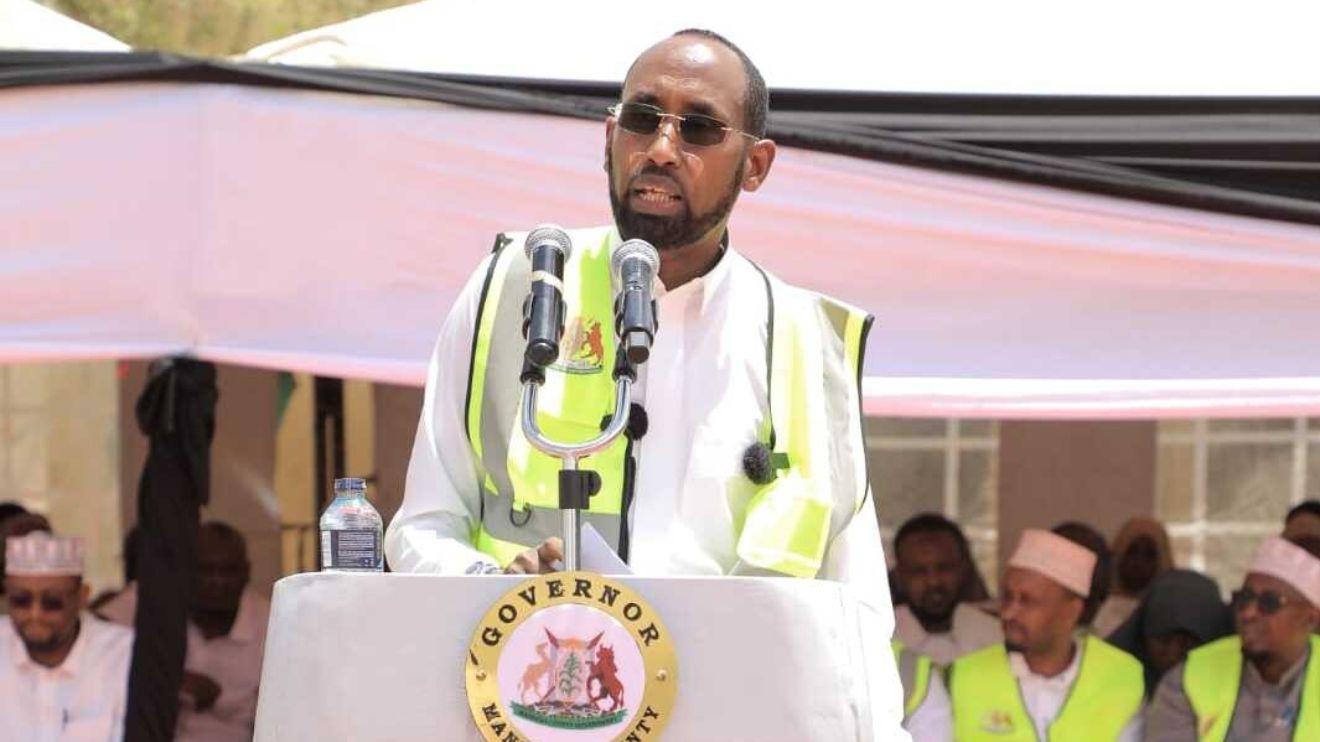
Last week, Mandera Governor Mohamed Adan Khalif reported that Jubaland forces had crossed into Kenya and occupied BP1 Primary School, forcing its closure and disrupting education for students preparing for national exams.
Mandera Woman Representative Umulkheir Kassim has also condemned the conversion of the school into a militia training ground, emphasising the threat to Kenya’s sovereignty.
Learning has also been affected in other schools, including Barwaqo Primary School, Duse Primary School and Shafshafey Secondary School, which have been used to host displaced persons from Bula Hawa, Somalia, due to conflicts involving Jubaland forces and the Somali National Army (SNA).
Stray bullets
Fighting between Jubaland forces and the SNA in Bula Hawa, a strategic town near the Kenya-Somalia border, spilt into Mandera, causing significant disruption.
Stray bullets, rockets, and live ordnance from the conflict landed on Kenyan soil, endangering residents and damaging property.
Mandera Senator Ali Roba has highlighted the fear and anxiety among residents, noting that these incidents are a direct result of Somalia’s ongoing conflicts.
Four Kenyans have been injured by stray bullets, and many residents fled their homes, becoming internally displaced.
In 2020, Jubaland forces used Mandera as a base to fight SNA troops attempting to re-arrest the then Jubaland security minister Abdirashid Janan, who was hiding in a Mandera hotel.
This led to clashes that caused at least one death and 11 injuries, with schools and courts closing due to insecurity.
Governor Ali Roba, at the time, urged the Kenyan government to intervene to prevent further escalation.
This isn’t an isolated incident but a symptom of deeper entanglements between Kenya and its volatile neighbour, Somalia.
Jubaland, a semi-autonomous region in southern Somalia, has long served as Kenya’s buffer against chaos in Somalia, but its militias’ cross-border activities now pose a direct challenge to Kenyan security and bilateral relations.
Jubaland is a federal member state in southern Somalia, encompassing the Lower Juba, Middle Juba, and Gedo regions. It emerged from the ashes of Somalia’s civil war in the early 2010s, with Kenya playing a pivotal role in its formation.
Operation Linda Nchi
In 2011, Kenyan forces invaded Somalia under Operation Linda Nchi, aiming to dismantle Al Shabaab strongholds and create a stable buffer zone along the shared border.
This initiative birthed Jubaland as a semi-autonomous entity, designed to keep extremists at bay from Kenya’s North Eastern region.
At the helm is Ahmed Mohamed Islam, better known as Ahmed Madobe, a former Islamist turned regional president.
Madobe’s forces, often referred to as Jubaland militias or Darwish troops, include a mix of clan-based fighters, primarily from the Ogaden and Marehan clans, trained and equipped with Kenyan support.
These militias are not a monolithic army but a coalition with the Ras Kamboni Brigade, once an anti-Al Shabaab outfit led by Madobe himself, forming the core, augmented by local paramilitaries and defectors from the Somali National Army (SNA).
Jubaland’s security apparatus has been battle-tested against Al Shabaab, participating in the African Union Transition Mission in Somalia (ATMIS).
However, internal fractures have emerged.
Since late 2024, Jubaland has been locked in an armed standoff with Somalia’s Federal Government (SFG) under President Hassan Sheikh Mohamud.
The dispute stems from constitutional disagreements, where Mogadishu refuses to recognise Madobe’s re-election in November 2024, viewing it as illegitimate and pushing for “one person, one vote” elections that Jubaland sees as federal overreach.
Clashes erupted in December 2024 near Ras Kamboni, a strategic town on the Kenya-Somalia border.
Jubaland forces routed SNA troops, with hundreds surrendering or fleeing into Kenya.
By early 2025, Jubaland MPs claimed the SFG was recruiting militias along the Kenyan border to destabilise the region, while Somalia accused Kenya of harbouring and training Jubaland fighters.
Why have Jubaland militias entered Kenya?
The Kenya-Somalia border, stretching over 700 kilometres through scrubland and desert, is notoriously porous. Militias cross it for reasons rooted in history, strategy, and survival.
Historically, Kenya has viewed Jubaland as an extension of its security perimeter. In the 2010s, Nairobi backed Madobe to create a “buffer state” against Al Shabaab incursions.
This alliance persists with Kenya mediating talks between Mogadishu and Kismayo (Jubaland’s capital), driven by self-interest.
Jubaland acts as a firewall, allowing Kenyan forces to conduct cross-border operations without full-scale invasion.
Recent entries stem from the Jubaland-SFG conflict. After defeats in Ras Kamboni and Beled Hawo, SNA soldiers fled into Kenya, seeking refuge at border points like Ishakani. Conversely, Jubaland forces have pursued foes across the line or used Kenyan territory for regrouping.
Economics and clan ties also play a role. Many Jubaland fighters have kin in Kenya’s Somali-majority counties, facilitating movement. Somalia’s air blockade on Jubaland in early 2025, which was flouted by Kenya and Ethiopia, further pushed logistics across borders.
Implications for Kenyan security and relations with Somalia
The presence of Jubaland militias on Kenyan soil is a double-edged sword. On one hand, they bolster counter-terrorism efforts; on the other, they erode sovereignty and invite escalation.
Security-wise, these forces heighten risks of spillover violence. Stray bullets from 2024 clashes injured Kenyan civilians, and militia occupations in Mandera have led to alleged killings. Moreover, instability in Jubaland allows Al Shabaab to exploit gaps, as seen in coordinated attacks on SNA and Jubaland bases in July 2024.
Diplomatically, relations with Somalia are strained. Mogadishu accuses Kenya of interference, from arming militias to ignoring the air blockade.
A 2020 border skirmish between Jubaland and SNA forces spilt into Kenya, raising alarms of regional destabilisation. Yet Kenya’s mediation role positions it as a peacemaker, albeit one with vested interests.
The ATMIS drawdown by December 2024 has amplified these tensions, with Al Shabaab advancing southward toward Jubaland.
The presence of other militias and terrorist groups in Kenya
Jubaland militias are not alone as Kenya hosts a mosaic of armed actors, each exploiting border vulnerabilities.
The most known of these groups, Al Shabaab, a Sunni Islamist group affiliated with Al Qaeda since 2012, remains Kenya’s primary terrorist threat.
Active in Somalia’s south, it conducts cross-border raids, ambushing Kenyan forces and civilians.
In 2024-2025, attacks surged post-ATMIS withdrawal with ambushes in Lamu County, assaults on bases in Lower Juba, and threats to westerners.
Al Shabaab enters Kenya for recruitment, extortion, and attacks, capitalising on porous borders and local grievances.
Oromo Liberation Front/Army (OLF/OLA) is also present in Kenya. Rooted in Ethiopia’s Oromia region, the OLA fights for Oromo self-determination.
It maintains a presence in northern Kenya, near the Ethiopian border, engaging in cross-border crimes like cattle rustling and ambushes.
Early this year, Kenya launched Operation Ondoa Jangili targeting OLA hideouts in Marsabit and Isiolo, amid accusations of banditry.
The entries of these militia into Kenyan territory are driven by geography, politics, and opportunity, with long border stretches remaining under-patrolled, with vast ungoverned spaces.
Kenya stands at a crossroads. Jubaland militias offer a shield against greater evils, but at the cost of sovereignty and regional harmony.
As Al Shabaab adapts and other groups proliferate, Nairobi must bolster borders, deepen diplomacy, and address root causes like marginalisation in the northeast.
Failure risks turning the buffer into a battleground, with Kenya paying the price.