


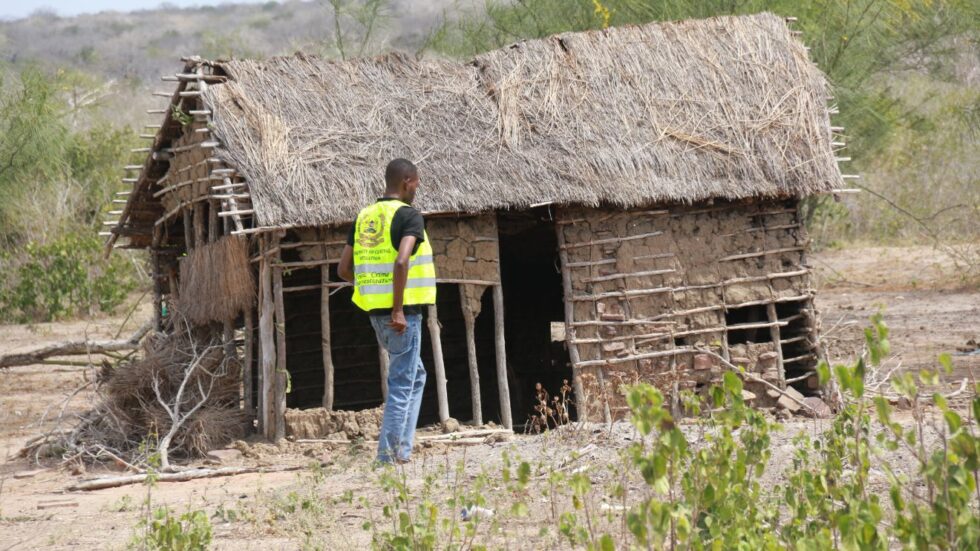
Beneath the relentless Kenyan coastal sun, the red earth of Shakahola and Chakama forests in Kilifi County still bleeds secrets.
In 2023, investigators unearthed a nightmare of over 453 bodies, twisted in eternal agony. This was the handiwork of a doomsday cult, Good News International Ministry (GNIM) led by self-anointed pastor Paul Mackenzie, which peddled self-afflicted starvation as a divine ticket to heaven.
Mackenzie is currently on trial for murder, terrorism, and child abuse.
The world recoiled as Kenya’s collective soul shuddered; Shakahola forest had become a synonym for the unspeakable evil of a vast, whispering graveyard that haunted dreams and media headlines alike.
For a fleeting moment, silence descended, heavy. But it was the deceptive quiet of a predator lurking, not peace.
Hushed rumours
Now, in the sweltering heat of last month, that silence has shattered once more. Not in Shakahola’s shadowed depths, but in the nearby thickets of Kwa Bi Nzaro village, a forsaken clearing in Chakama forest, a mere 30 kilometres before you get to Shakahola from Malindi.
What began as hushed rumours in July has exploded into a chilling revival, proving the cult’s venomous ideology didn’t die. It mutated, slithered into hiding, and now has struck again.
Later in the month, a Malindi court gave green light for exhumations, unleashing the Directorate of Criminal Investigations (DCI) Homicide Unit into the sandy wilderness. What they have found isn’t just echoes of the past, but a grotesque escalation of Shakahola.

Initial probes revealed seven suspicious mounds, barely veiled by loose soil, disturbed by prowling hyenas and feral dogs that had feasted on the exposed remains. By August 21, forensic teams had clawed out five intact bodies from six graves, plus ten fragmented parts strewn across the blood-red clearing.
But the horror deepened as authorities now tally 60 graves at Kwa Bi Nzaro, with exhumations surging to 34 bodies by August 30, many fresh, buried mere weeks ago, alongside over 100 scattered limbs, heads, and torsos, gnawed and dispersed by scavengers.
Sluggish response
Police now admit failures ranging from intelligence gaps, botched coordination, and a sluggish response that allowed the cult to flourish unchecked.
A few weeks before the exhumations started, four emaciated survivors were rescued from Kwa Bi Nzaro area in Chakama forest. Shockingly, among them was a husband-and-wife survivors pulled alive from Shakahola in April 2023, rehabilitated and released, only to be ensnared anew by the cult’s siren call. They came back to finish what they started.
Eleven suspects, including Sharleen Temba Anido, who allegedly bought the land for this new altar of death, have been arrested and charged with radicalisation and aiding terrorism.
To grasp Kwa Bi Nzaro’s tragedy, rewind to Shakahola’s genesis. GNIM’s sermons painted apocalypse in vivid strokes, urging devotees to sell worldly possessions, forsake homes, and starve in the forest’s embrace. Guards enforced the fast with iron resolve, watching as families withered. Toddlers gasping their last, elders crumbling into dust.
Locals in Bofu, Bungale, and ADC Ranch swear many Shakahola remnants evaded the 2023 raids, dissolving into the nearby thickets to continue their grim rites. “They’re still out there,” insists villager Simon Menza, his voice laced with dread.
Diving deep into the nearby forests
In 2024, the ADX team joined Menza and another villager, Dickson Ngumbao, known locally as “Chafua” on a trek into the forests bordering Shakahola. We walked deep into the ADC ranch, 10 kilometres from the original murder site. With us were police officers to provide security.
What we found was disturbing: makeshift shelters built from branches and tarpaulins. Clothes scattered like shed skins. Cooking pots overturned in haste. And patches of disturbed soil, raised slightly like unmarked mounds.
The police froze. The officer in charge shook his head, forbidding us from digging. But the silence of that moment, the stillness of the ground, felt like a held breath. We left, but the memory stayed. It felt as if eyes were watching us from behind the thorny bushes.
Haunting these tales is “Rasta,” the cult’s ghostly enforcer, described by locals as a machete-wielding phantom who once menaced rescuers in Shakahola.
Villagers recount chilling brushes even after Shakahola rescues. A charcoal burner recounted encountering the mythical Rasta in ADC farm, months after the rescues. “He’s myth and monster,” Menza confesses. “Meet him in the thorns, and you vanish.”
Other stories ripple through the villages. In Shakahola trading centre, a businessman, Suleiman Osman, claims one of his herders was killed in late 2023 after stumbling on a cult hideout. “I believe he found them, and they killed him so that he could not report,” Osman says. He lodged a report with authorities, but to this day, he has received no update.
In Bofu village, neighbouring Shakahola Forest, charcoal burners talked of stumbling upon two emaciated men in the forest in December 2023. Locals assumed they were cult remnants, fasting. Police later dismissed them as “street boys from Mombasa.” The contradiction only deepened mistrust between the community and the state.
“The government insists it’s all over in Shakahola,” Ngumbao declared last year in an interview with ADX, his voice laced with foresight. “But these people are still hiding in the forest.”
Fresh harvest of horror
“They are still there,” said Menza. “There are graves beyond Shakahola. But the Government does not want you to see them.” How eerily prescient his words ring now, as Kwa Bi Nzaro’s blood-soaked sands yield a fresh harvest of horror?
In Malindi town, families of 419 children, women and men who perished in “Shakahola One” are still awaiting DNA results in limbo, their grief compounded by bureaucratic sludge. After the initial DNA testing, only 34 bodies out of the 453 were released to the families for burial.
Bodies of 419 human beings are still being held in a container since 2023. Now more are being discovered in “Shakahola Two”. These are real people, not statistics,” says Victor Kaudo of the Malindi Community Human Rights Centre.
Activists like Mathias Shipeta of Haki Africa and Walid Sketty of Muslims for Human Rights demand forensic transparency and swift justice. Kilifi Senator Stewart Madzayo blasts police opacity.
Mackenzie’s trial crawls onward, DNA backlogs piling up, Kwa Bi Nzaro’s influx threatening to overwhelm the system.
Sneaking back to perpetuate the madness
What began as one man’s delusion now reveals a hydra of severed heads regrowing in adjacent forests, ideology spreading like wildfire among remnants.
What Kwa Bi Nzaro is painfully confirming is that Shakahola was not finished; it festers in Kilifi’s soil, in survivors’ haunted eyes, in Kwa Bi Nzaro’s fresh pits, and that the cult endures, a contagion defying eradication, luring more to its starving embrace.