


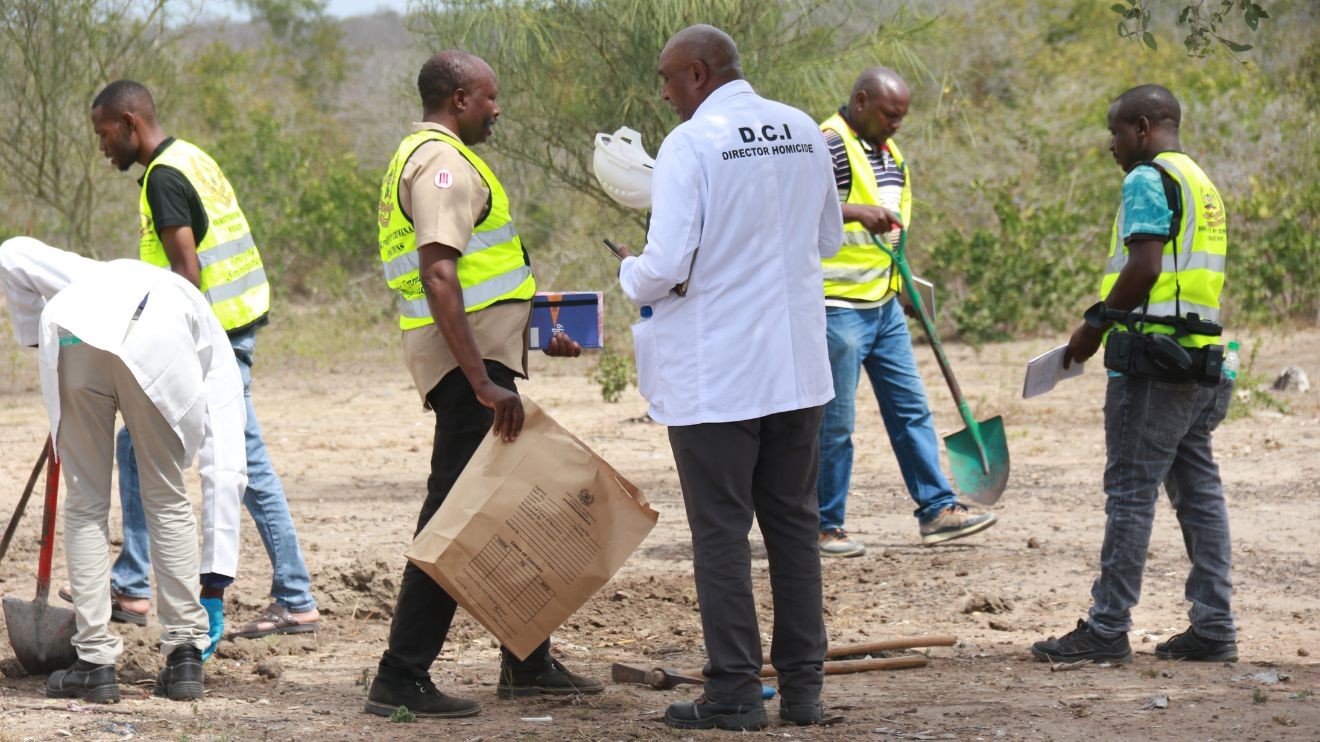
In April 2023, as the death toll mounted in Shakahola and public outrage swelled, government officials made several high-profile pledges to address the crisis, prevent future atrocities, and hold accountable those responsible. The promises included:
Tighter regulation of religious organisations: In May 2023, the government vowed to overhaul the legal framework governing religious groups. President William Ruto announced the formation of a presidential task force to review and recommend reforms, emphasising the need to curb “rogue” preachers while protecting religious freedom.
This was echoed by then-Interior Cabinet Secretary Kithure Kindiki, now Deputy President, who described the massacre as a “horrendous blight on our conscience” and promised new laws to prevent extremist cults from operating unchecked.
Prof Kindiki specifically assured Kenyans that “such cults would never thrive unnoticed again,” committing to intelligence-led crackdowns on dangerous religious movements.
Enhanced monitoring and intelligence: Officials pledged to bolster surveillance in vulnerable areas. Prof Kindiki directed intelligence units to actively monitor communities at risk of radicalisation, including through community policing and early warning systems.
This was part of a broader promise to address intelligence failures that allowed the cult to flourish for years despite prior reports dating back to 2017.
The government also committed to investigating complicity among local administrators, such as chiefs and clan elders, who facilitated the cult’s land acquisition in Shakahola Forest.
Swift justice and accountability: Amid the exhumations, authorities promised rapid prosecutions. Prof Kindiki vowed “severe punishment” for perpetrators.
The government assured families of thorough forensic investigations, including DNA testing for victim identification, and psycho-social support for survivors. Additionally, a Senate ad hoc committee was established in May 2023 to probe the proliferation of religious organisations and recommend preventive measures.
Support for victims and families: Officials committed to releasing bodies for burial promptly after autopsies and providing closure through identification processes. The government also promised resources for the rehabilitation of survivors who had been rescued from the forest.
These pledges were made against a backdrop of international condemnation and domestic pressure from human rights groups, religious leaders, and the media, who highlighted how warnings from locals and defectors had been ignored for years.
What has been done since 2023
While some actions followed the promises, implementation has been uneven, with critics pointing to bureaucratic delays, fading momentum, and persistent systemic failings. Here’s a breakdown of key developments:
Regulatory reforms and task force outcomes: The presidential task force, formed in May 2023, submitted its final report in August 2024, recommending stricter registration requirements for religious organisations, mandatory financial transparency, and penalties for radicalisation.
The government adopted some proposals, including banning several fringe churches linked to similar practices.
The Senate ad hoc committee’s October 2023 report similarly called for balancing religious freedom with oversight, identifying government neglect since 2017, and recommending prosecutions for complicit officials. However, full legislative changes remain pending, with no comprehensive new law enacted so far.
Prosecutions and legal actions: Mackenzie and associates were charged in January 2024 with terrorism, murder, manslaughter, and child abuse. The trial began in August 2024.
By March 2024, the government began releasing identified bodies to families, starting with 34 after DNA delays. However, 419 remain unclaimed due to backlogs.
Victim support and investigations: The Kenya National Commission for Human Rights (KNCHR) has monitored the tragedy, documenting failures like denied psycho-social support for survivors and custodial deaths of suspects.
Some rescues and rehabilitations occurred, but reports note inadequate follow-up, with survivors often rejected by communities and returning to cult-like activities.
Despite these steps, much remains undone. The Senate report highlighted unprosecuted officials, ignored warnings, and aborted rescues due to mysterious interventions.
The initial urgency had waned, with no systemic overhaul of local administration or comprehensive survivor reintegration programs.
Could “Shakahola II” have been avoided?
The 2025 Kwa Bi Nzaro incident has so far seen 34 bodies exhumed by August 30, 2025, from shallow graves just kilometres from the original site, linked to cult remnants enforcing starvation. This resurgence has sparked widespread outcry, with analysts and locals arguing it was entirely preventable had the government fulfilled its 2023 promises.
Ignored tips from locals about graves, delayed exhumations, and slow responses mirror Shakahola’s failures. Residents alerted authorities in July 2025, but action only intensified after bodies surfaced, despite Prof Kindiki’s 2023 vow of proactive monitoring.
Some victims of Kwa Bi Nzaro were 2023 Shakahola survivors who returned due to poor reintegration into the communities, highlighting unaddressed psycho-social gaps. Human rights advocates like Hussein Khalid accuse the Interior Ministry of incompetence, noting Mackenzie’s alleged prison communications with followers.
The Senate and KNCHR reports had flagged these risks, recommending ongoing surveillance, yet implementation faltered as security presence in Shakahola and Chakama areas diminished over time.
After initial raids on some religious groups and task forces formed, momentum faded amid bureaucratic inertia and corruption suspicions. The government’s underestimation of Christian cults persisted, with resources skewed toward other threats.
While partial actions like prosecutions and task forces show progress, unfulfilled promises on prevention enabled Kwa Bi Nzaro.